
Policy engagement timeline
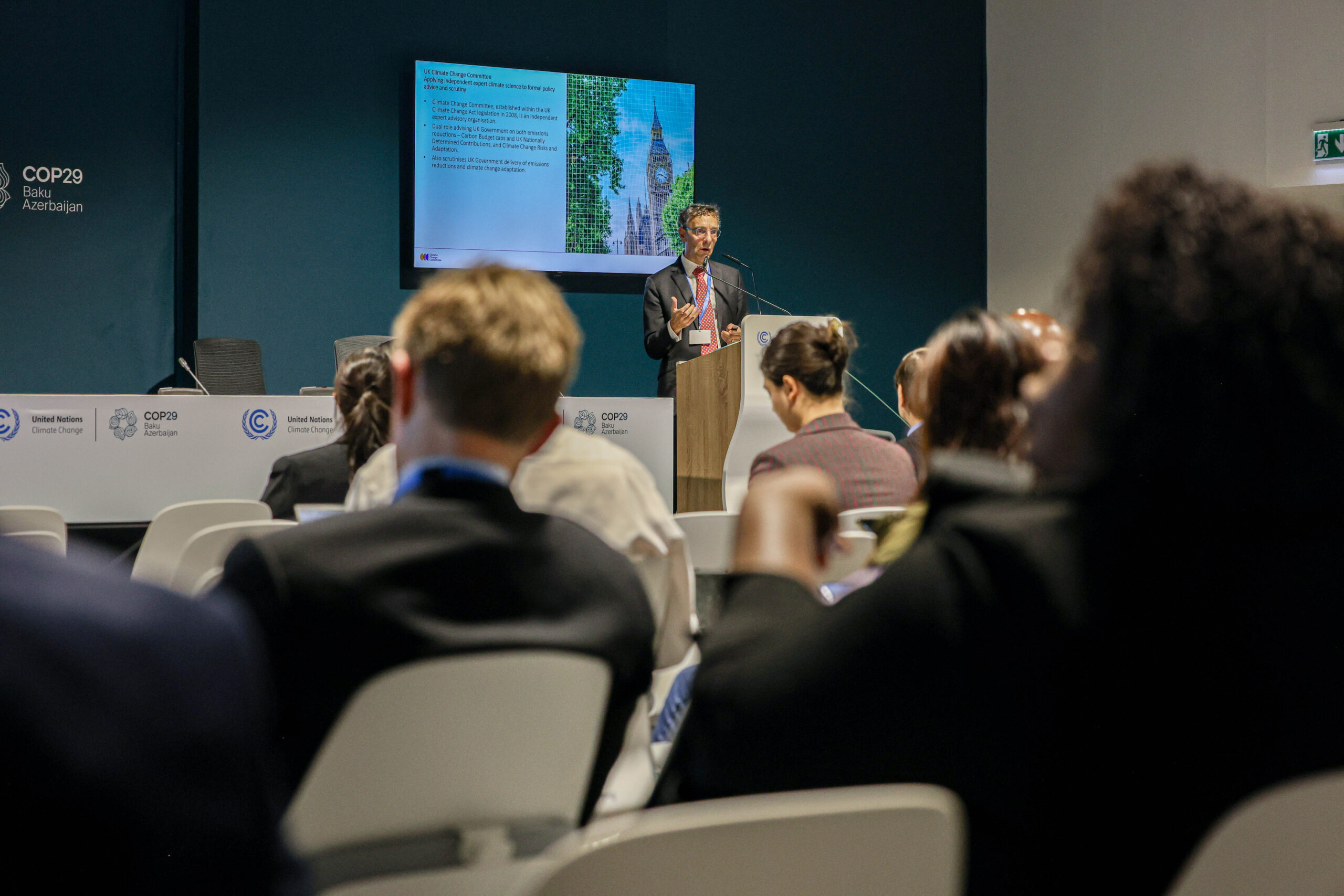
We’ve created a timeline of key moments within the climate policymaking landscape to help the higher education community engage more effectively with decision makers
About this resource
Universities and research institutions have an important role to play in ensuring decisionmakers have access to the evidence they need to take effective action on climate change.
This timeline has been created for the UK higher education community to provide an overview of key moments for engagement in the national and international climate policymaking landscape to support pathways to impact. It will be updated regularly as new information becomes available about these key moments.
If you have feedback on the timeline or suggested edits please contact us at UKClimateUniversities@imperial.ac.uk.

Latest news

Blog: Reflections from the Higher Education Networks Roundtable at COP28
Ruth Jihyung Joo is a Knowledge Exchange Fellow at the University of Leeds. In this blog, she reflects on her experience attending a roundtable event for higher education networks at ... Read more

Blog: Climate change education and skills at COP28
Dr Tess O’Hara is a Lecturer in Engineering Hydrogeology at Newcastle University. In this blog, she reflects on discussions at COP28 with Baroness Barran, Parliamentary Under Secretary of State ... Read more

Blog: Coastal Nature-based Solutions for climate change adaptation and mitigation
Elina Apine is a Research Associate in the School of Geography and Sustainable Development at the University of St Andrews. In this blog, she discusses benefits of nature-based solutions for ... Read more